Most businesses are using AI as a fancy search engine. The ones pulling ahead are deploying agents — systems that observe, decide, act, and keep going until a job is done.
An agent is not a chatbot. A chatbot completes one turn and waits. An agent runs a loop — continuously — until a task is done or a human steps in.
Before building anything, three questions must be answered: What does the agent need to know? What tools does it have access to? And where does the human stay in the loop? Get those three right and you can automate almost anything responsibly.
Most businesses are at Level 1 without realising it. The leverage — and the competitive moat — is at Levels 3 and 4.
A single call to an AI model with a carefully engineered system prompt. One input, one output. No loop, no tools. This is what most "AI tools" actually are.
The model is given tools it can call — read a database, send a message, query an API. It decides which tool to use, gets the result, and decides the next step. This is the agent pattern.
One orchestrator agent breaks a complex task into sub-tasks and delegates to specialist agents — each with a narrow scope, purpose-built prompt, and specific tool access. Results are synthesised back into a final output.
Adds persistent memory (the agent knows your business across sessions), human-in-the-loop gates for irreversible actions, an append-only audit trail, and evaluation pipelines to catch drift.
Each product below is the same pattern at a different level — deterministic code owns the facts, the model owns the judgement and language, a human owns every irreversible action. Here's what each one actually runs.

Property condition reporting. Computer vision grades each photo, writes the description, assigns severity and a trade.
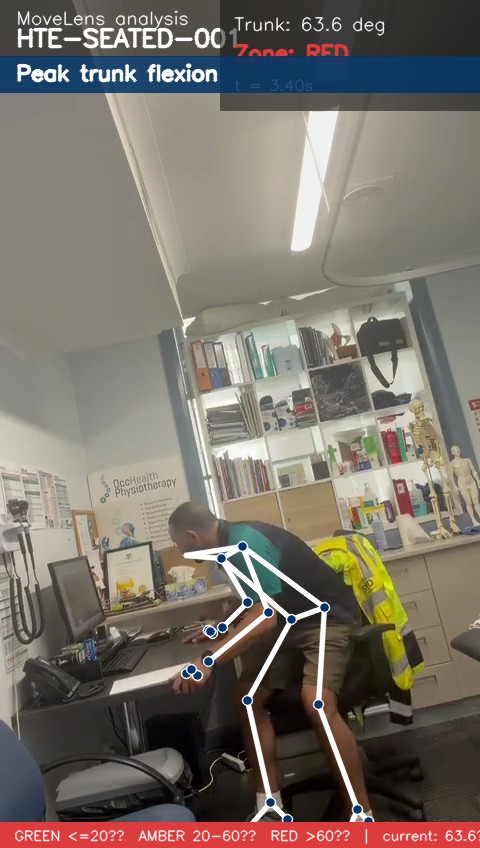
ISO 11226 · clinicalClinical movement analysis. Pose estimation extracts 33 landmarks; Python computes every clinical number; the AI only validates keyframes — never invents a figure.
A family-law & mediation back office. A coordinator safety-screens every message before the model, then routes to intake, conflict & safety, drafting, scheduling or billing.
A property-management desk for Gold Coast & Bondi portfolios. Arrears, maintenance and renewals agents each draft work and queue it for one-click approval.
Five specialist analysts (trend, range, breakout, accumulation, risk) vote on the market regime. The orchestrator decides in deterministic Python; advisory only.
The gym-facing sibling of MoveLens. Counts reps, measures joint angles, scores form against reference patterns — the numbers are computed, the AI only coaches.
The simplest level: one well-structured call. Paste a business description; get the top 3 automation opportunities and a 90-day roadmap. The foundation everything else builds on.
On a $50M business, SG&A is typically $10–15M — much of it labour in repeatable functions. These four workflows are where the hours bleed.
Recording lands in storage. Transcription agent converts speech to text. Scoring agent rates the call against the firm's qualification criteria (budget, timeline, authority, need). CRM-writer agent logs the score and surfaces follow-up actions. Escalation email drafted — human approves before send.
Invoice arrives by email. PDF-parser agent extracts line items. Matcher agent cross-references against purchase orders in the accounting system. Anomaly-detector agent flags mismatches and exceptions. Matched invoices auto-approved for payment; unmatched invoices routed to finance with a summary of the discrepancy.
New ticket arrives. Classifier agent assigns priority and category. For tier-1 queries (FAQ-level), a responder agent drafts and sends the reply immediately. For tier-2, a draft is prepared and queued for human review before sending. Routing agent assigns unresolved tickets to the right team member with context pre-populated.
Scheduled cron fires on the 1st of each month. Data-collector agent pulls KPIs from finance, sales, and ops systems. Analyst agent compares against targets and prior period, flags variances above threshold. Writer agent structures the board pack with commentary for each section. CEO receives a draft for review — edits and approves before distribution.
All savings are indicative estimates based on typical SME staffing ratios. Actual impact depends on process complexity, data quality, and implementation approach.
Every production agent deployment follows this structure — from the trigger that starts the job to the audit trail that proves it was done right.
Webhook · Scheduled cron · User action · Email arrival
Returns a job ID immediately. Agent processes asynchronously.
Reads memory breaks task into sub-tasks delegates to specialists synthesises final output
Narrow scope. Focused system prompt. Specific tools only.
HIGH-risk actions pause here. Human approves or rejects.
Business context persists across sessions. Agent reads before acting, writes after.
Append-only. Every action logged: agent, tool, input, output, timestamp.
AI should handle the 70% that is repetitive, rules-heavy, and judgement-light. The remaining 30% requires human accountability — not because the AI can't produce an output, but because the consequences of being wrong require a human to own them.
Data extraction and entry — parsing invoices, pulling CRM records, populating fields
Classification and scoring — leads, tickets, calls, documents
First-draft communication — emails, reports, proposals (human reviews before send)
Monitoring and alerting — watching for anomalies, flagging exceptions
Routine approvals — matched invoices, standard leave requests, tier-1 support
Strategic direction — where the business is going and why
Key relationships — trust, empathy, negotiation, conflict resolution
Legal and compliance sign-off — final approval on contracts, regulatory filings
Performance management — hiring, firing, performance conversations
Crisis judgment — decisions under pressure with incomplete information
Land one workflow. Prove the number. Build trust. Then scale. The technology is 30% of the job — rebuilding the workflow and getting people to use it is 70%.