Production AI systems — and how they work inside an agentic system
These are real outputs from live products. Three are computer-vision / analysis tools an orchestrator can call (SnapCheck, MoveLens, NRL AI Coach); the fourth (BiffCoin) is a complete multi-agent orchestrator itself. Together they show the full pattern — from a single bounded tool to a coordinating agent fleet.
A property manager photographs a unit. Computer vision grades every surface, writes the condition description, assigns a severity, and recommends a trade — turning a 2-hour write-up into a finished report before they leave the property. Below is a real inspection: 1/63 Arthur St, Randwick. 14 photos, 11 defects detected.
Routine Inspection — 1/63 Arthur St, Randwick NSW 2031
14 real inspection photos — 9 bathroom, 5 kitchen. Click any to enlarge. Each was analysed independently by computer vision.
Major
Bathroom — Ceiling
Widespread discolouration and irregular texture consistent with moisture ingress. Visible areas of bubbling and peeling paint present.
Licensed plumber to investigate moisture source; licensed builder to assess damage.
Major
Bathroom — Ceiling/wall junction
Significant discolouration and staining in the top-left corner consistent with moisture ingress or mould growth. Similar marks in the top-right corner.
Licensed plumber/builder to investigate; mould remediation specialist if mould confirmed.
Major
Bathroom — Wall tiles above basin
Extensive peeling and flaking of surface material on wall tiles above the basin/tub. Large area of peeling coating on the side of the tub. Further deterioration behind the cistern.
Licensed builder or tiler to assess surface degradation.
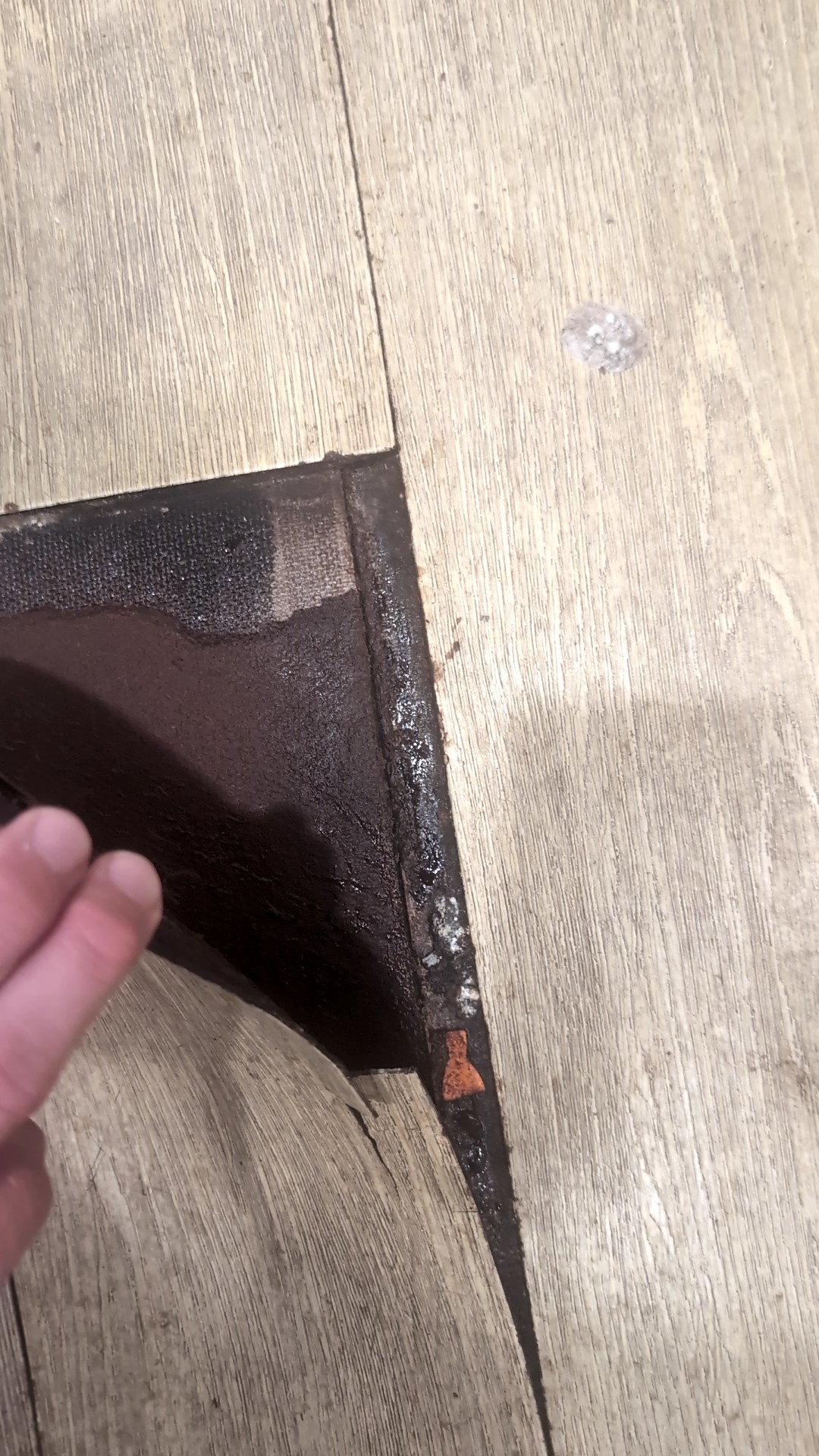
Major
Kitchen — Flooring (Damaged)
A section of flooring is lifted, revealing dark discolouration and moisture on the sub-surface consistent with water staining. A white fuzzy patch consistent with mould is visible on an adjacent section.
Building inspector or water-damage remediation specialist to assess extent.
Moderate
Bathroom — Above mirror
Scattered faint greenish/greyish spots consistent with mould or mildew growth. Indicates a potential moisture issue.
Mould remediation specialist to assess extent and cause.
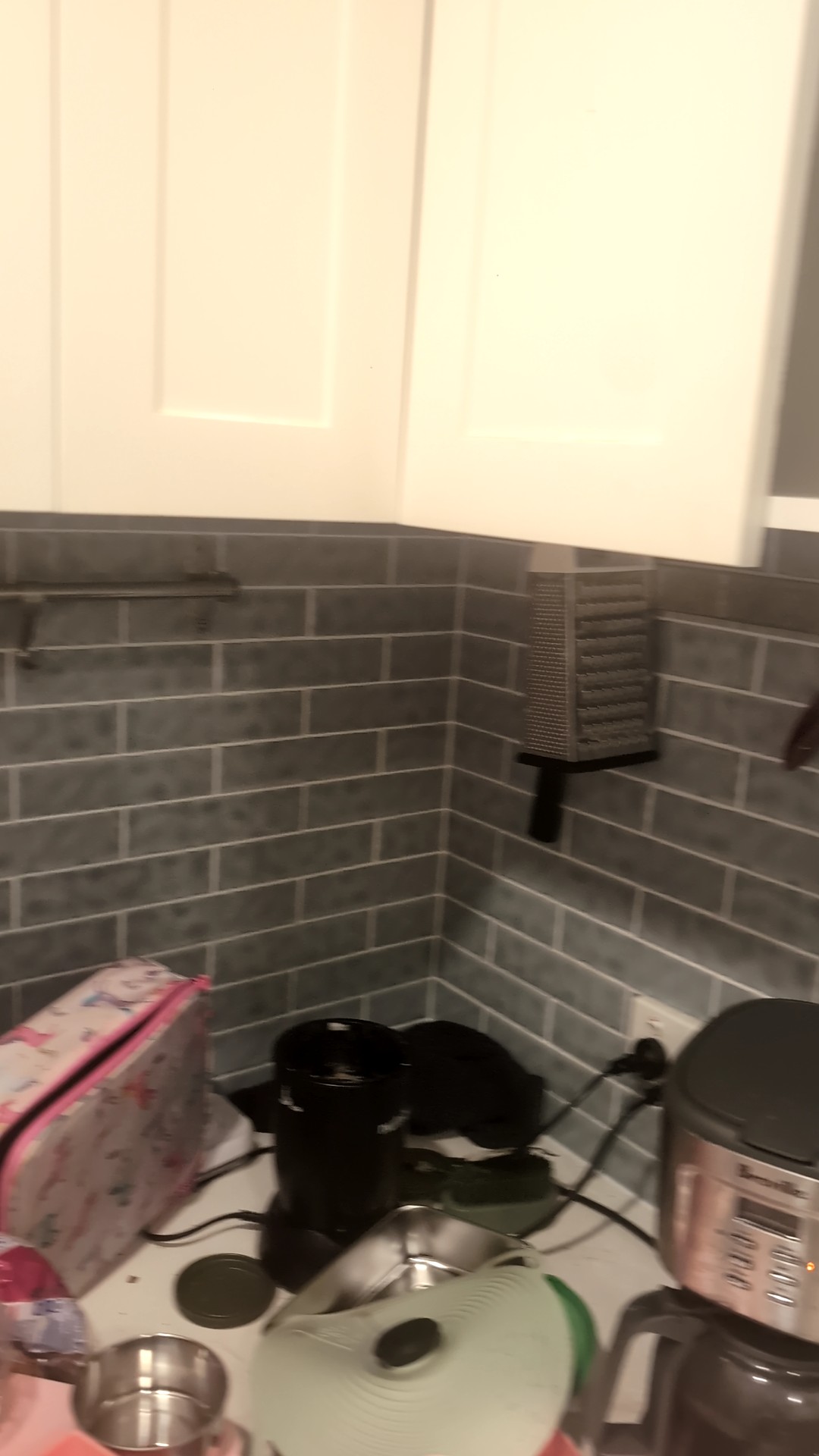
Moderate
Kitchen — Floor planks
Visible and numerous gaps between plank sections. Surface dirty with scuff marks and discolouration consistent with general wear.
Licensed flooring professional to assess gaps and overall condition.
On its own, SnapCheck produces a report. Inside an agentic system, those 4 Major defects become inputs: the orchestrator routes the plumbing items to a plumber RFQ, the tiling to a tiler, the flooring to a water-damage specialist — each drafted and queued for one-click approval. The inspection stops being a document and becomes the trigger for a workflow.
A worker is filmed performing a task. Pose estimation extracts the pose per frame; Python computes every clinical number deterministically against ISO 11226 / 11228 and RULA standards; the AI writes the interpretation, never the figures. Below is a real clinical seated-work assessment — the actual report output.
Clinical Seated Report — ISO 11226 (HomeTask Ergo)
Run ID Seated_v2_20260206 · ISO 11226 / RULA · 146.8s session
HIGH · 10/12
Recorded seated-work session — 146.8s. The skeleton overlay and every angle are measured from the footage, not estimated.
Every angle, exposure-zone percentage and fatigue figure is computed deterministically from the pose data against the ISO 11226 / RULA standards — auditable and reproducible. The AI layer writes the clinical interpretation; it never produces the numbers. A clinician reviews before any recommendation is acted on.
The agentic step
MoveLens
Scores one worker: HIGH risk, 17% red zone
Orchestrator
Aggregates across the whole worksite
Risk Agent
Ranks workers, drafts intervention plan
Human Gate
Physio signs off every clinical call
One video produces one report. Inside an agentic system, every worker's analysis feeds a worksite risk dashboard — the agent ranks the highest-risk tasks, drafts the intervention recommendations, and flags which workers need a clinician review first. The clinician approves; the AI never makes the call.
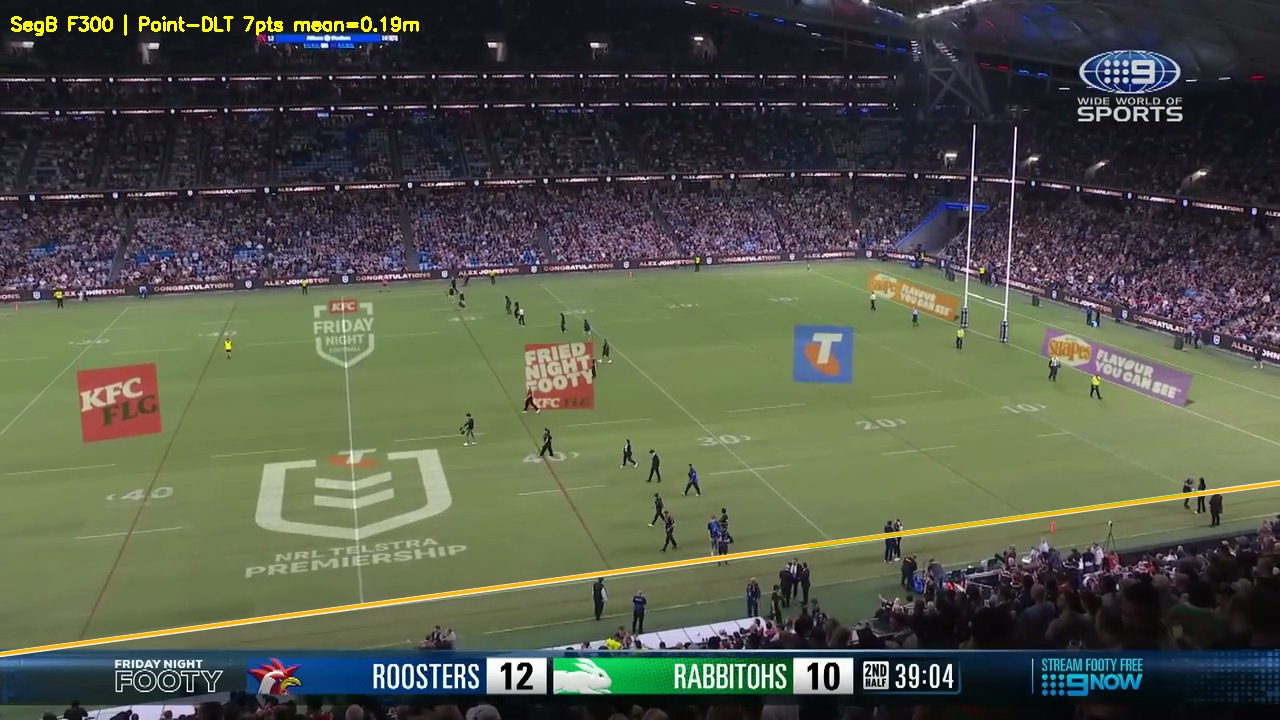
A third computer-vision domain — sport. One broadcast feed becomes structured play data: a YOLOv8m detector (nrl_v1, fine-tuned on hand-labelled NRL footage) finds every player, the ball and the referee; field-line geometry solves a homography that maps the broadcast to a true-scale field. Below is real model output, not hand-drawn boxes.
Live detection — players (green), referee (orange), ball (cyan). Boxes are model output. Full demo
Field model on broadcast
Bird's-eye view
Pipeline stage
LIVE
Player recall vs base+31%
Field calibration accuracy~0.12 m
Classes detectedplayer · ball · ref
DetectorYOLOv8m @ 1280px
Real model output
A first-of-its-kind analytics engine — players, ball and referee detected and mapped to a true-scale field from a single broadcast feed. Everything shown is real model output, not hand-drawn boxes.
The agentic step
NRL AI Coach
Detects players/ball/ref, maps to the field
Tracking agent
Projects movement to a top-down field model
Analytics agent
Try locations, heatmaps, play metrics
Human gate
Coach validates before it informs selection
Same pattern as the property and clinical work: deterministic CV owns the measurements (who's where, in metres), the agents add the analytics layer, and a human owns the call. It's the third domain — property, movement, now sport — on one detection backbone.
The other three products are tools an agent calls. BiffCoin is the agent itself — a working Level 3 orchestrator that turns five tested trading bots into one decision desk. It reads the market, asks each specialist whether its strategy fits the current regime, makes a deterministic decision in Python, and routes any real-money action to a human. 344 tests. Fails closed on bad data. Never places a live trade on its own.
Orchestrator — one decision desk, five specialists
Each specialist has a narrow scope (least-privilege) and maps to one real, paper-traded bot. The decision logic is deterministic Python — the model only narrates afterwards.
One full agentic cycle
Observe
Pull live BTC market snapshot, score the regime
Decide
Each specialist votes; orchestrator picks the regime-fit strategy
Act
Low-risk actions auto-run; real buys blocked
Human Gate
Any live trade requires explicit human approval
This is the 70% Principle enforced in code: HOLD_CASH is low-risk and runs autonomously; DEPLOY_BASKET (real buys) is classified HIGH and routed to the gate. On missing or insufficient data the agent fails closed — it recommends holding cash. The orchestrator decides; the human owns every irreversible action.
Advisory software — not financial advice
BiffCoin is educational and analytical. Live trading is disabled by default. Backtests and paper-trading results are not live results. It is shown here as an architecture demonstration of the multi-agent pattern — the same orchestrator + specialist + human-gate structure that powers the property and movement workflows above.
The pattern that connects them
Why these two products are really the same architecture
All three follow one rule, and it's the rule that makes them safe to embed in an autonomous system: deterministic code owns the facts, the model owns the judgement and the language, and a human owns every irreversible action.
1
Each product is a tool
SnapCheck and MoveLens aren't endpoints — they're functions an orchestrator can call. "Inspect this unit." "Score this worker." The output is structured data, ready to hand to the next agent.
2
The agent adds the workflow
The intelligence isn't just the analysis — it's what happens next. Defects become RFQs. Risk scores become intervention plans. The orchestrator turns a single output into an end-to-end process.
3
The human stays in the loop
Nothing irreversible happens without approval. The agent drafts; the person decides. That's what makes it deployable in a real business with real liability — and it's enforced in the architecture.
This is how AI actually gets deployed
Not one clever model — a fleet of bounded tools an orchestrator coordinates, with a human gate on every consequential action.
 Major
Major
 Major
Major
 Major
Major
 Major
Major
 Moderate
 Moderate